


Front-only or front-and-rear: which dash cam do you need?
The single biggest decision in choosing a dash cam isn't the brand or the resolution. It's whether you need one camera or two.
What a front-only camera actually covers
A front-facing dash cam records the road ahead through the windscreen: the vehicle in front, oncoming traffic, junctions, and anything that happens in front of your bonnet. It's the configuration most drivers picture when they think of a dash cam, and it covers the majority of everyday incidents: someone pulling out without looking, a red-light run, a stone chip on the motorway.
What it doesn't see is anything behind or beside the car. A rear-end shunt while you're stationary at lights, or a wing mirror clipped while parked, happens outside a front-only camera's field of view entirely.
What adding a rear camera changes
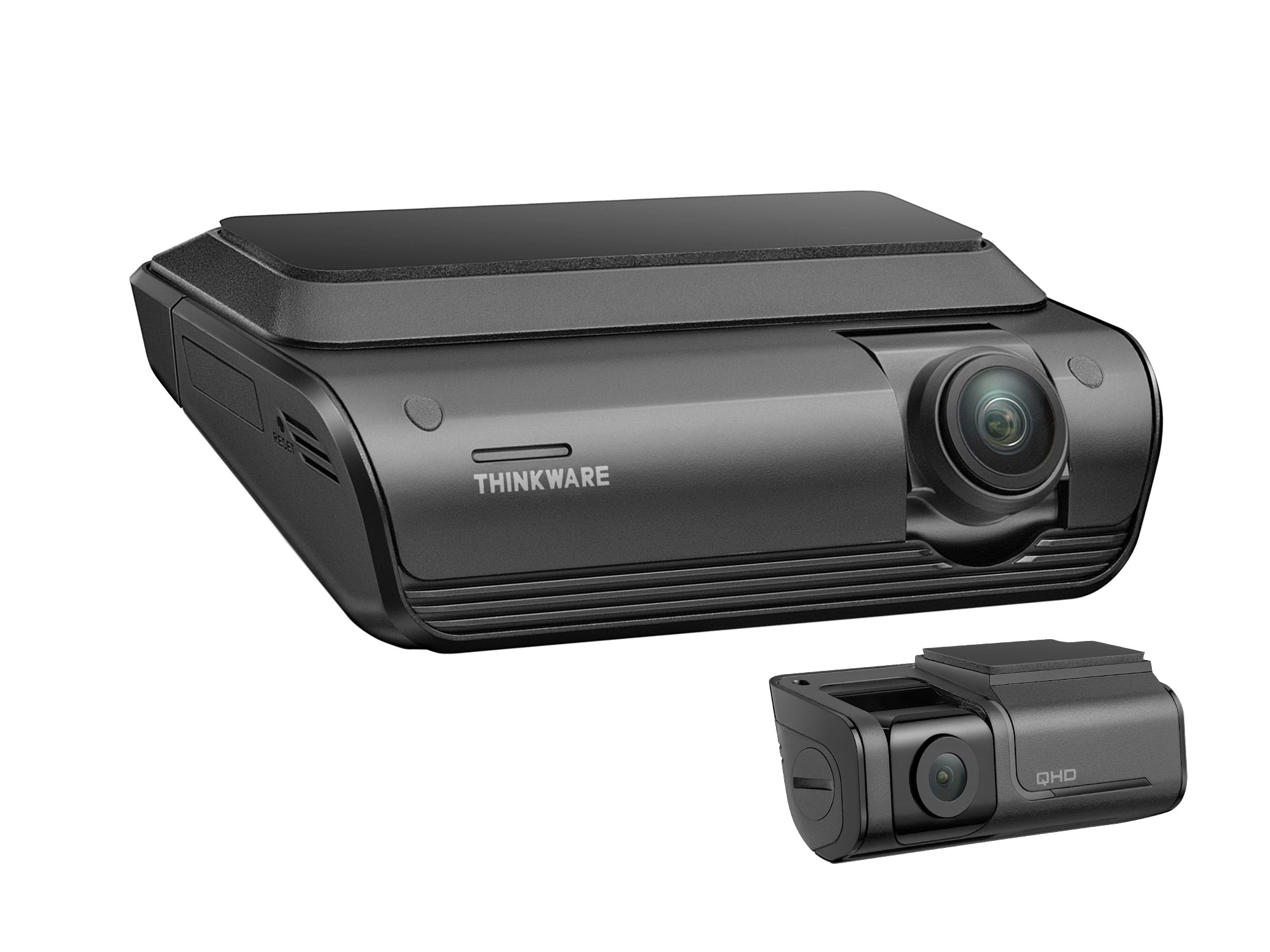
A front-and-rear system adds a second, smaller camera facing backwards, usually mounted on or near the rear windscreen and connected to the front unit by a cable run through the headlining and door sills. It records continuously alongside the front camera, so an incident from behind (someone braking sharply into the back of you, or reversing into your car in a car park) is captured on the same timeline.
The trade-off is installation: routing a cable the length of the car is more involved than sticking a single unit to the windscreen, which is why FixNow Mechanics' mobile fitting for a front-and-rear system takes longer and costs more than a front-only fit.
Who each option genuinely suits
Front-only suits drivers whose main concern is what happens in front of them: new drivers building confidence, or anyone who mostly wants cover for the classic "they pulled out on me" scenario. It's also the lower-cost, simpler-to-fit option if budget or a straightforward install matters more than complete coverage.
Front-and-rear suits anyone who spends time in stop-start traffic, uses car parks regularly, or wants a single continuous record of both ends of the car rather than betting on which direction an incident will come from.
At a glance
A quick way to match your situation to a camera configuration, using FixNow Mechanics' current range.
Mostly city/A-road driving, want the simplest and lowest-cost option
F70 Pro (front-only)
A single Full HD front camera covering the road ahead, with the most straightforward fit.
Regular stop-start traffic or frequent car park use
Q200 Front & Rear
Adds a Full HD rear camera alongside the 2K front camera, so incidents from behind are covered too.
Want the sharpest available front footage as well as rear coverage
ARC700 Front & Rear
Steps the front camera up to 4K UHD while keeping a 2K rear camera, for more detail at both ends. Good lighting and low motion blur still matter as much as resolution for reading plates clearly.
Worth knowing before you decide
- Neither configuration covers the sides of the vehicle. A camera facing directly forward or backward won't capture an incident approaching from a 90° angle, such as a T-bone at a junction just outside its field of view.
- A rear camera records through the rear windscreen, so tinted glass, a heavily loaded boot, or a bike rack blocking the view can all reduce what it actually captures.
- Adding a rear camera means a second cable run through the vehicle's interior trim. On some vehicle shapes this is more involved than others, which is why FixNow Mechanics confirms vehicle details before booking a front-and-rear fit.